

A Golf-Course-Grade Backyard: The Spring Branch Putting Green
— client story
2,000 square feet, 7 holes, real elevation, and a roll built to the client's exact specs. One week after it was finished, he had friends over for a tournament.
When "Backyard Putting Green" Undersells What's Actually Possible
Most people picture a small, flat patch of green with a single cup when they think "backyard putting green." This project is a good reminder that it doesn't have to be that at all. A Spring Branch homeowner came to us wanting something closer to a real golf course than a casual practice spot — enough space, enough variety, and enough design to actually feel like a course, not a putting mat with grass on it.
What we built together was a 2,000-square-foot, 7-hole green with real elevation changes and a roll speed dialed in to his exact preference — golf-course grade, built into an actual backyard.
"Within a week of it being finished, he had friends over for a tournament."
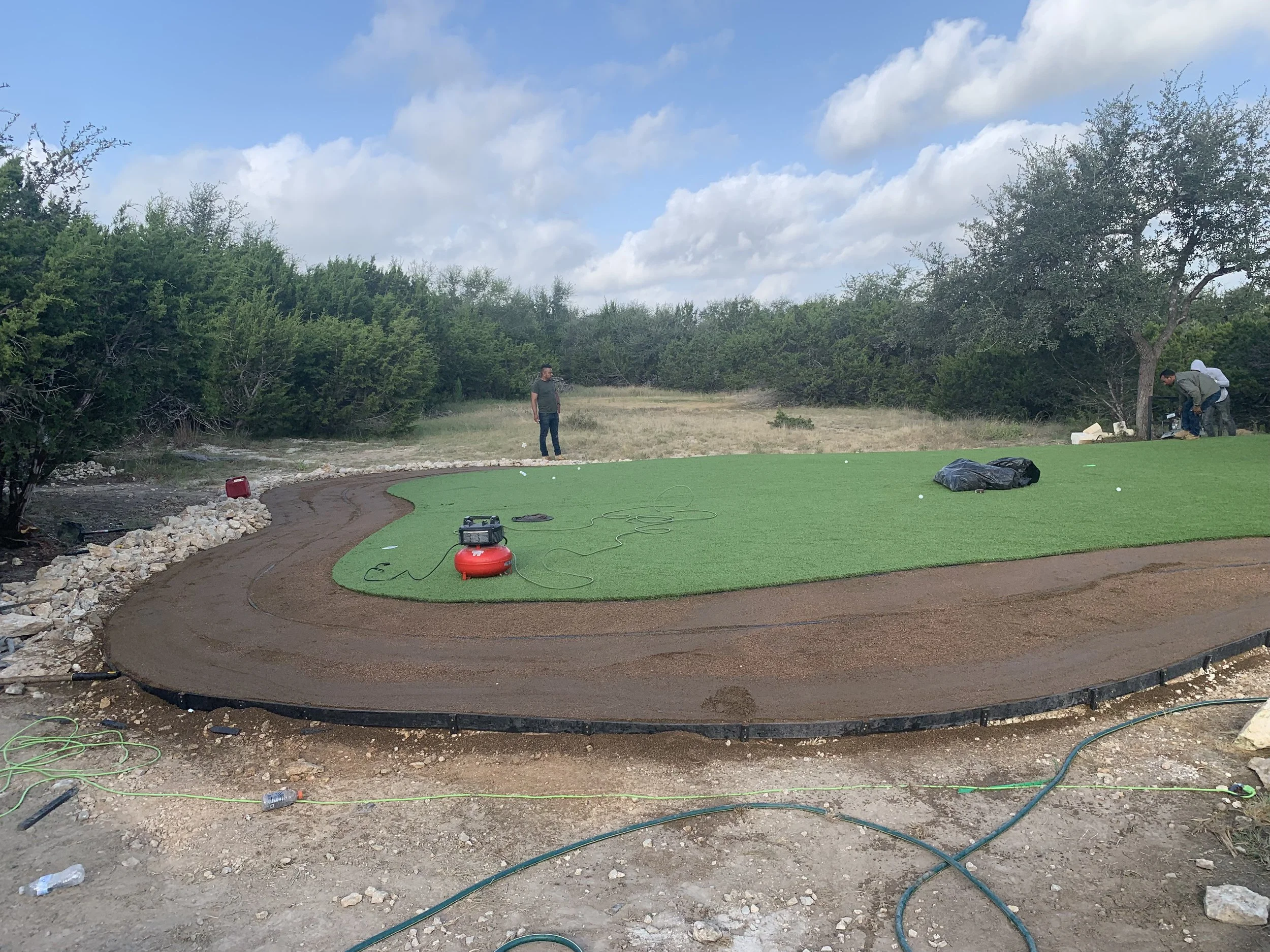
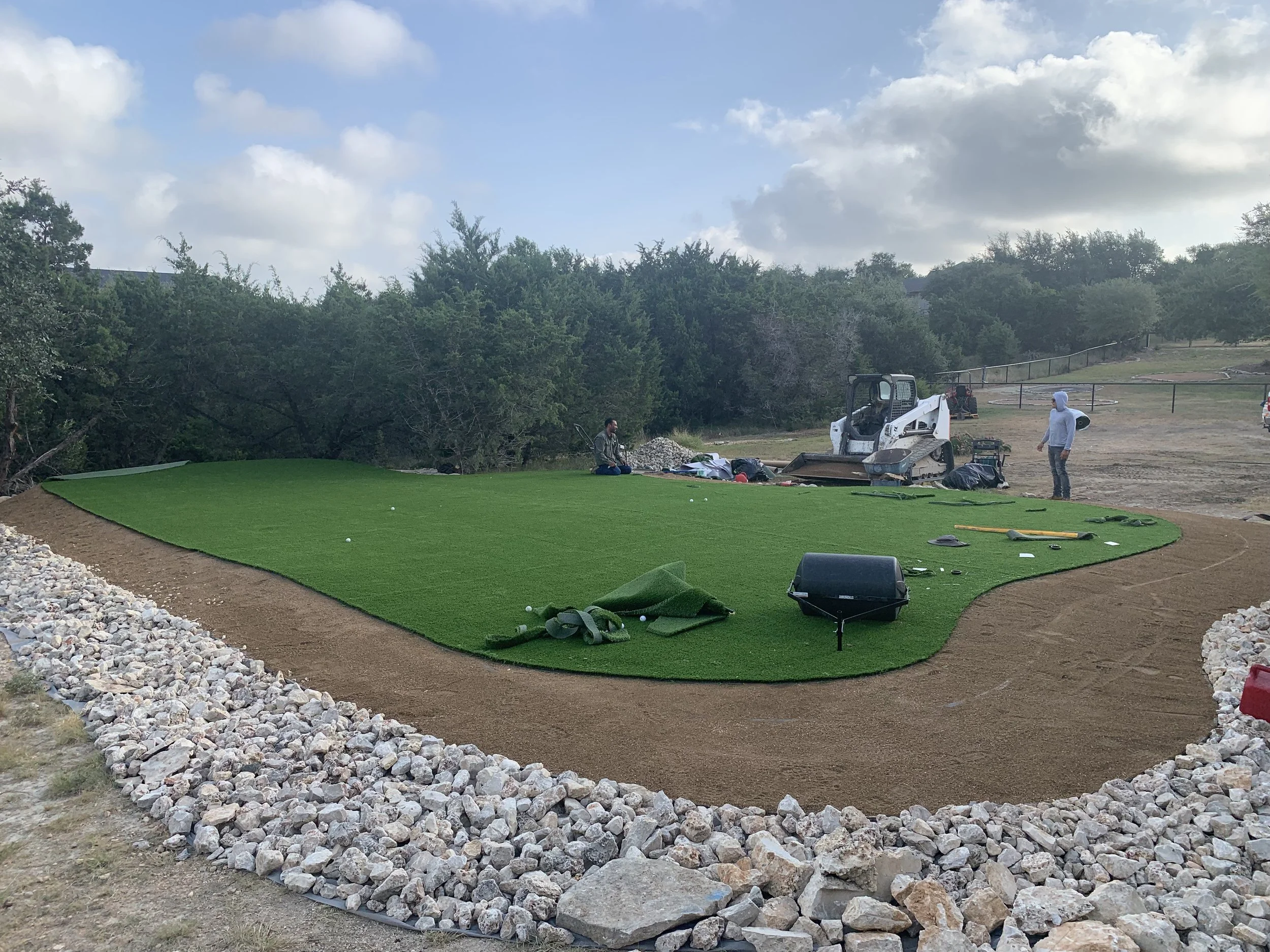
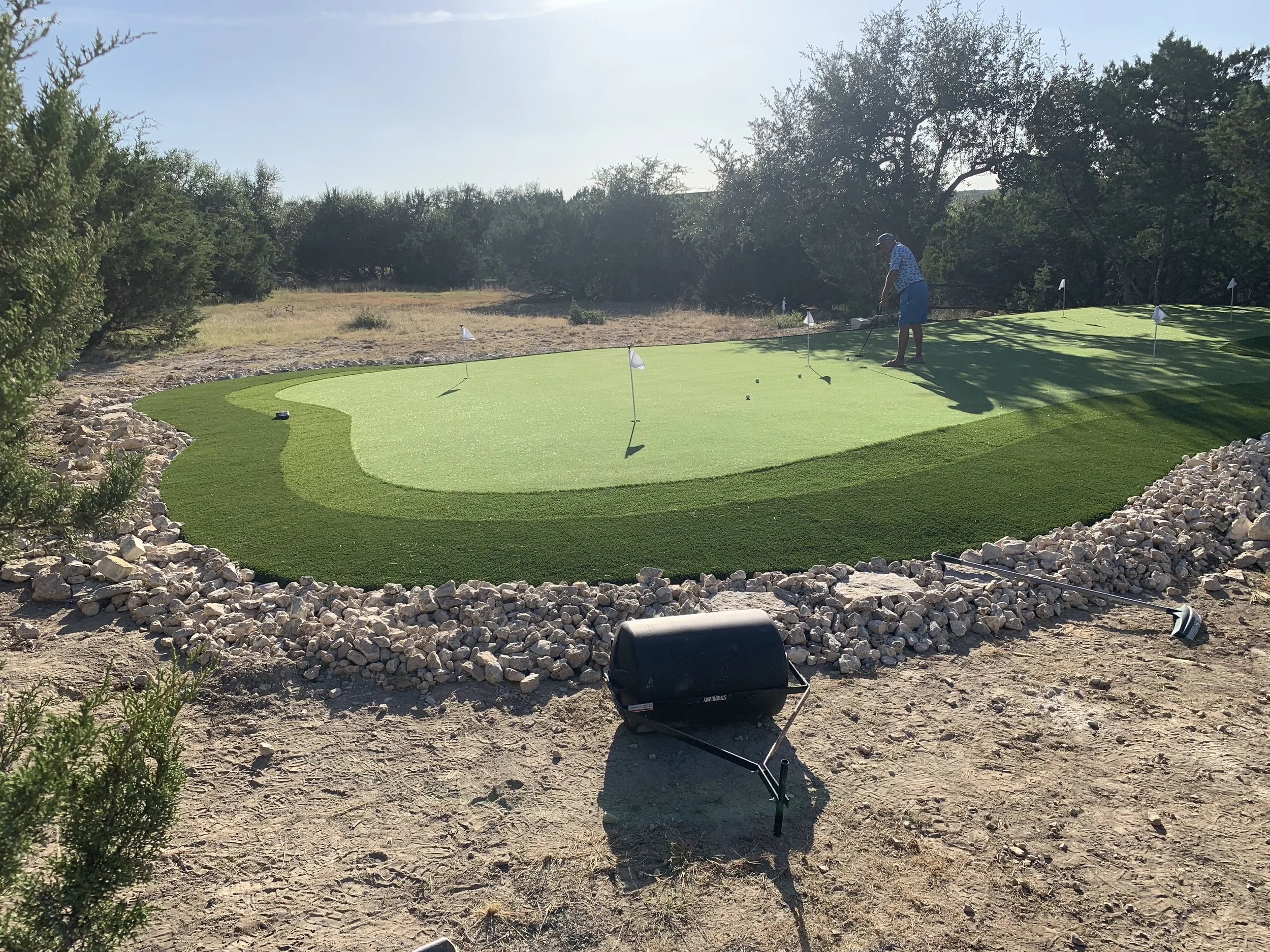
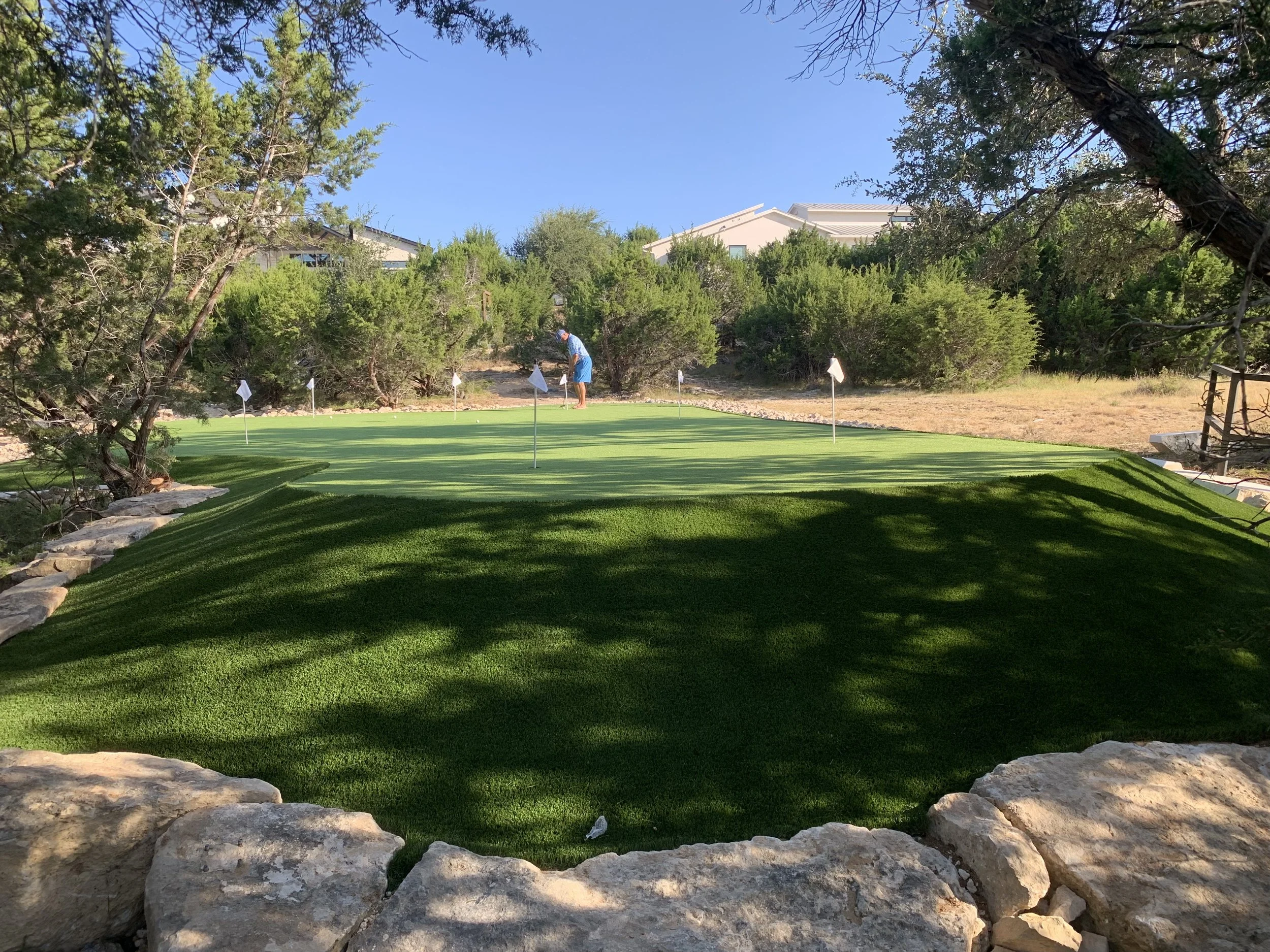
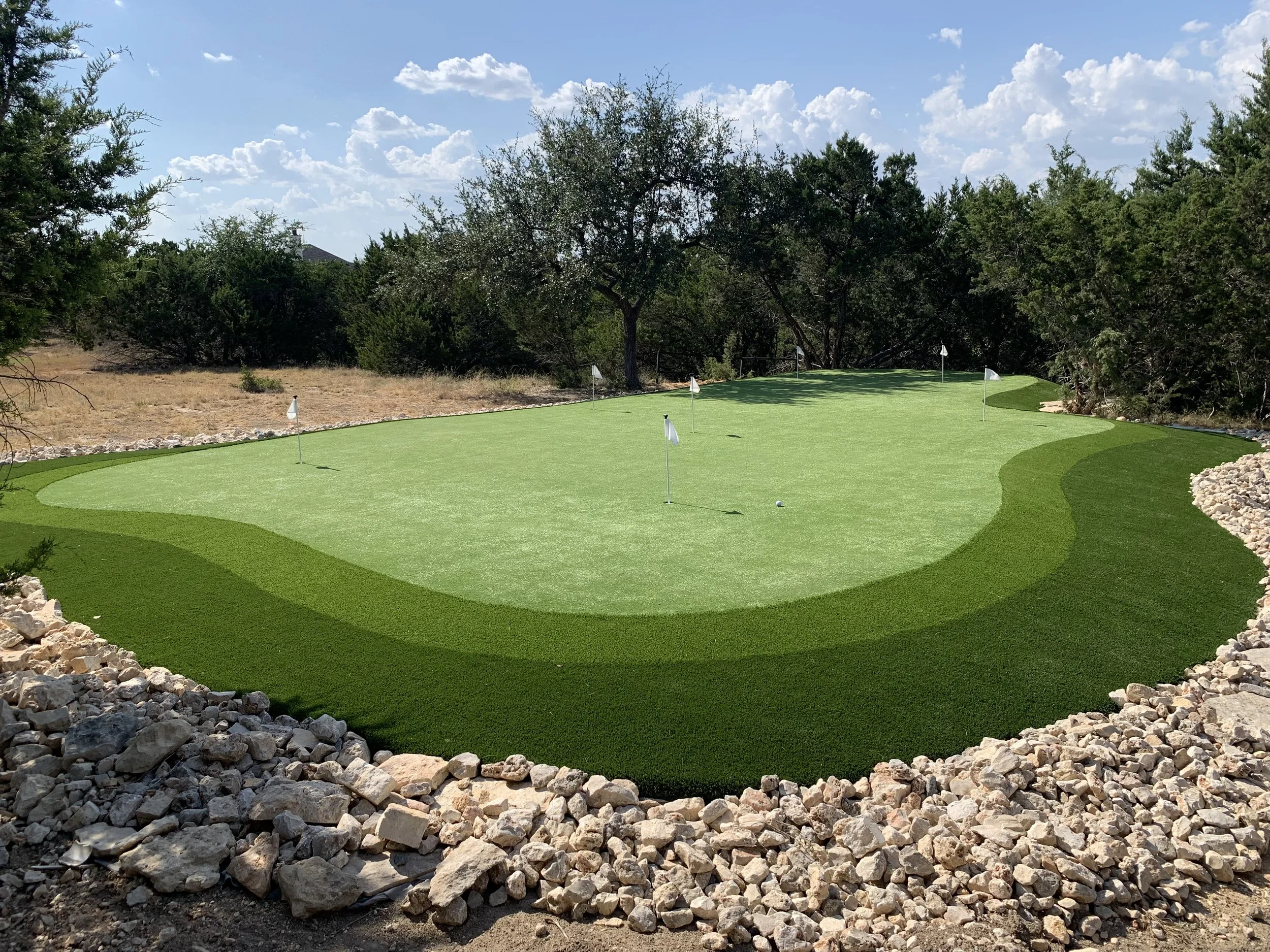
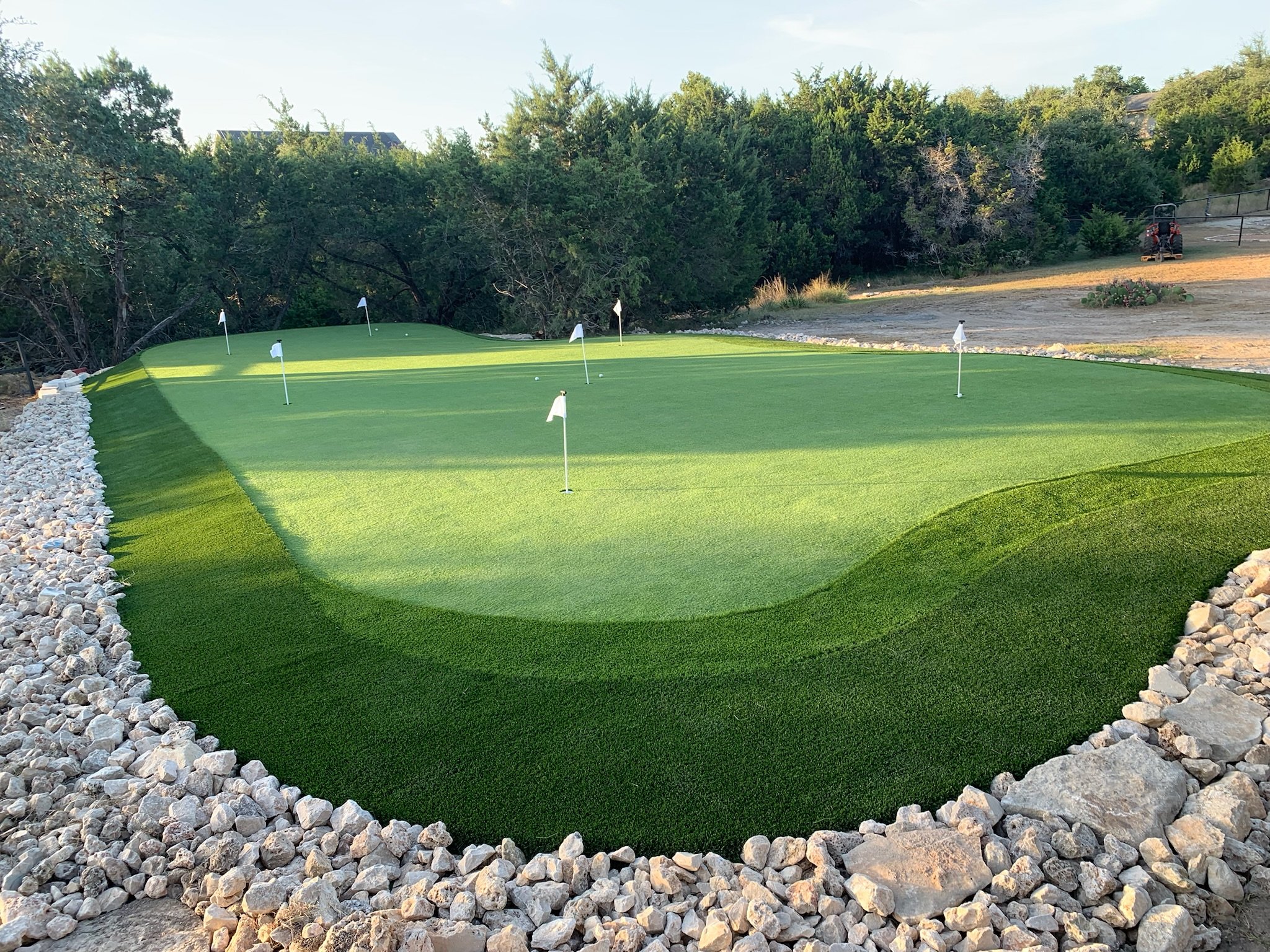
Spring Branch, TX — A 7-Hole Backyard Course
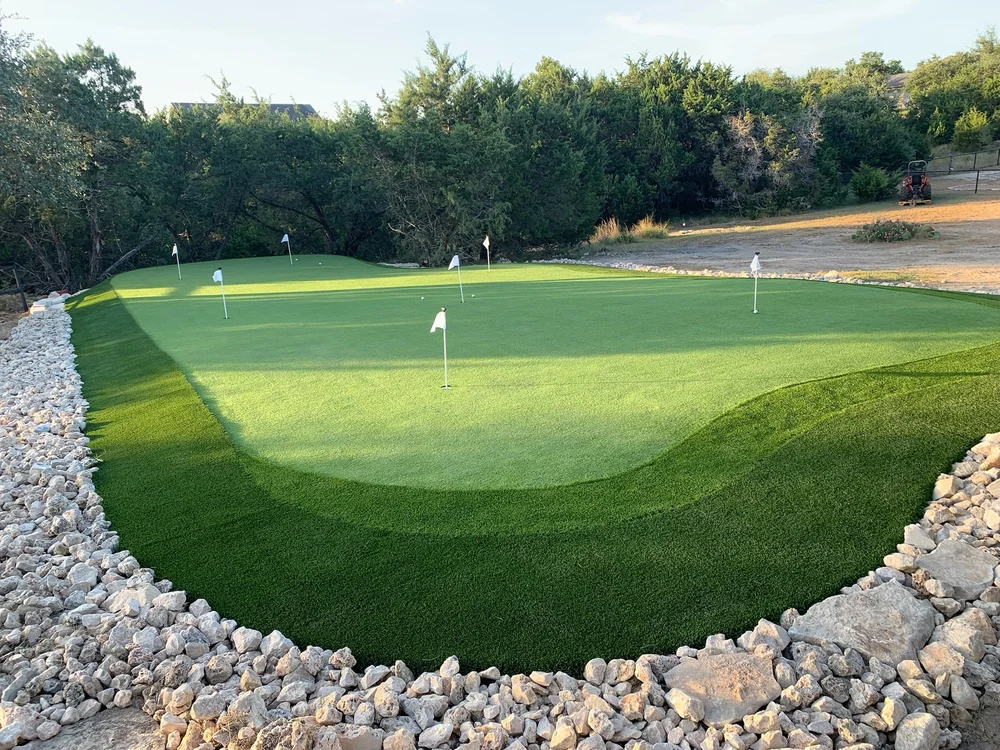
What Actually Goes Into a Golf-Course-Grade Green
A lot of the difference between a green that plays like a toy and one that plays like a real course happens in layers most people never see. Here's what went into this one specifically:
The padding underneath the turf matters more than people expect — it's what gives a chipped ball a true, realistic bounce on landing instead of a dead, artificial thud. Combined with a 1-inch pile height and a heavy infill process, the surface delivers a roll and feel that's genuinely comparable to a maintained grass green, without needing one.
Designed With the Client, Not Just For Him
Every green we build is custom-designed around the specific space and the person using it — this project is really just that philosophy taken to its fullest expression. A 2,000-square-foot, 7-hole layout only works if the hole placements, breaks, and elevation changes are actually thought through for that specific yard, not dropped in from a generic template.
That collaboration paid off fast: within a week of the green being finished, the client had friends over for an informal tournament on it — exactly the kind of use a green like this is built for.
The best backyard greens don't feel like a backyard at all.
Real elevation, a true roll speed, and hole variety are what separate a green you putt on occasionally from one you actually want to invite people over to play.
Frequently Asked Questions
Ready to design a green built around your space?
Free consultations for backyard and commercial putting greens across San Antonio, Boerne, Bulverde, and the Hill Country.
Get my free quote